10-14-2026
Listen to audio here:
If you prefer to watch the interview, click below:
The architecture of global power was being assembled while American soldiers were still fighting World War II. Behind closed doors in Switzerland, international bankers were negotiating the financial future of a world whose nations had yet to emerge from the war.
Mel K, investigative journalist and author of Infiltration, Not Invasion: America Betrayed, 1944–1954, traces the origins of a governing structure she believes has steadily transferred authority away from sovereign nations. Her investigation begins with the Bank for International Settlements, where financial relationships continued across enemy lines during the war. She follows the activities of Wall Street attorneys whose influence extended into American intelligence and the institutions established during the postwar reconstruction. The names that repeatedly surface in her research include John Foster Dulles and Allen Dulles, two brothers whose careers eventually placed them at the center of American foreign policy and intelligence.
The Rockefeller network becomes increasingly important as Mel examines the foundations that helped shape international policy. She describes an expanding institutional influence over American universities and the development of global governance initiatives. Her research raises disturbing questions about the relationship between private financial interests and the public institutions entrusted with national sovereignty. By 1953, John Foster Dulles had become Secretary of State and Allen Dulles had taken control of the CIA, placing two men with extensive international financial and political connections in positions of extraordinary authority.
The investigation reaches into Operation Paperclip and the recruitment of former Nazi scientists into American institutions. Mel examines the role of John McCloy in postwar Germany and the decisions that returned certain convicted industrial leaders to positions of influence. She connects those decisions to the emerging intelligence establishment and the use of covert operations abroad. The 1953 overthrow of Iran’s government becomes a critical example in her account, particularly when she examines the commercial interests represented by Sullivan & Cromwell. The subsequent intervention in Guatemala raises further questions about the relationship between American foreign policy and corporate interests.
One of Mel’s most consequential arguments concerns the International Organizations Immunities Act of 1945. She maintains that the legal protections granted to international institutions have created serious barriers to public accountability. The International Monetary Fund and World Bank occupy a central place in her argument, alongside the United Nations and the World Health Organization. Mel contends that the scope of these protections deserves far greater scrutiny, especially when American taxpayer funds flow through organizations operating under special legal privileges.
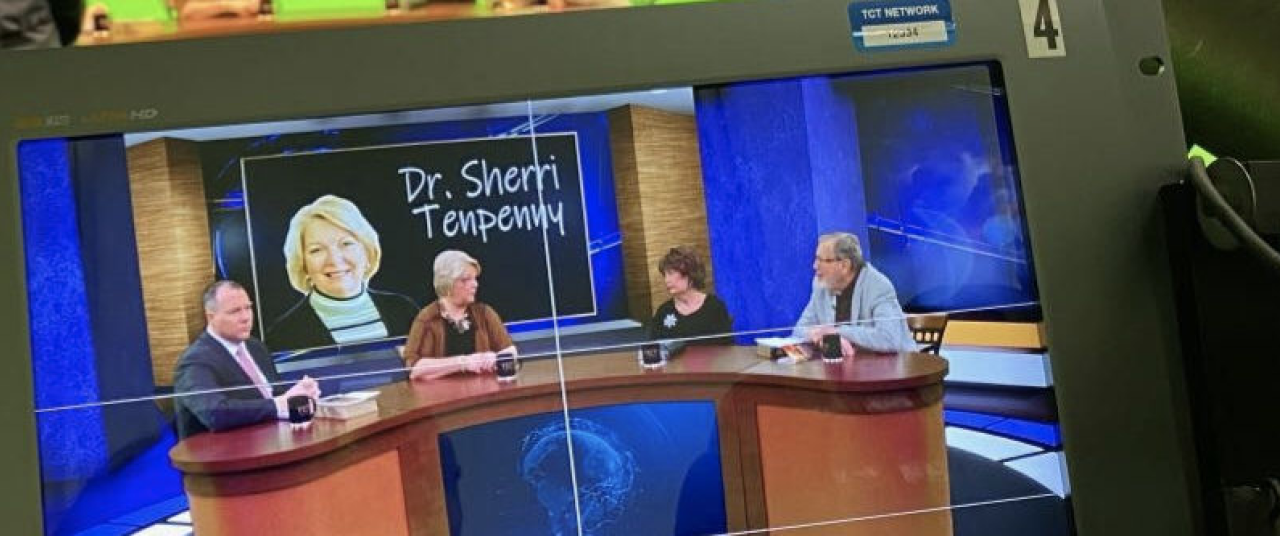
The consequences of these postwar decisions remain central to Mel’s examination of Agenda 2030 and the expansion of supranational governance. Her research returns repeatedly to the same historical period, when international institutions acquired powers and privileges that continue to influence national policy. Dr. Sherri Tenpenny presses Mel on the research behind these claims and the historical decisions that still warrant examination. The unresolved issue is the extent to which elected governments can exercise meaningful oversight over the international institutions their predecessors helped establish.
America emerged from World War II as a superpower. Mel K’s research raises a far more disturbing question about who actually inherited the power.
Meet the Guest
Mel K is a journalist, filmmaker, author, and host of The Mel K Show. Her work investigates institutional power and the historical decisions that continue to influence American sovereignty. A graduate of New York University with a background in journalism and film, Mel draws on historical archives and government records to examine the relationship between international finance and American governance. Her book, Infiltration, Not Invasion: America Betrayed, 1944–1954, investigates the postwar development of international institutions and the people who helped establish them.
Website:
The Mel K Show
Book: https://amzn.to/4qyVTf4
TODAY’S SPONSORS:
Get your 1st bottle of the #1 CELLULAR DETOX on the market for just $14
Daily detox is non-negotiable. With toxins everywhere—in the air, food, and water—you need something effective every day.
That’s why I always recommend Pure Body Extra – Zeolite. It’s a cellular level detox, flushing out heavy metals, pollutants, and even mold, safely.
BUY TODAY at DrTdetox.com
10% OFF Supplements and Apparel with promo code DRT10:
www.shoptenpenny.net
Zero Accountability in a Failed System: How Big Pharma Weaponizes Vaccines, Public Health, and the Law
Dr.Tenpenny’s most definitive work to date, providing a sweeping exposé of the corruption entrenched in the medical establishment, pharmaceutical industry, and government.
It highlights how these powerful entities have manipulated public trust, prioritized profit over people, and ignored accountability for the harm they’ve caused.