
I get quite a few questions about the differences between prescription lithium and lithium supplements, so let me try to answer them here.
Prescription Lithium
Prescription lithium is a psychiatric medication generally given as a mood stabilizer. In the US, lithium is FDA-approved for use in bipolar I disorder, both for acute episodes and for long-term maintenance.
Doctors generally prescribe it for long-term bipolar maintenance to help reduce both the frequency and severity of future mood episodes, particularly manic episodes. Lithium can reduce acute mania, elevated or irritable mood, racing thoughts, and counteract decreased need for sleep and excessive activity and impulsivity. It can also help reduce suicide, according to the NIH institute the National Institute of Mental Health. Doctors sometimes prescribe it for other psychiatric uses, such as difficult-to-treat depression.
The amount of prescription lithium needed for therapeutic effects can be relatively close to the amount that causes toxicity, and that is why doctors closely monitor blood lithium levels as well as kidney and thyroid function.
Why prescription lithium is treated differently from lithium supplements
But prescription lithium, a powerful medication with a narrow therapeutic range, is very different than lithium supplements. Lithium orotate is sold as a supplement. It is not a substitute for prescription lithium nor is it an FDA-approved treatment for bipolar disorder.
I’m often asked why someone should or would take a lithium supplement when they don’t have bipolar disorder. It’s a great question, and the answer is that it can have neuroprotective effects. What does that mean?
Lithium orotate supplements provide a very low dose of lithium, and research shows this may be beneficial in several ways.
Low-dose lithium helps with neuroprotective effects, including effects neurogenesis, inflammation, and cellular stress. While further clinical trials are needed, there are potential benefits for individuals with mild cognitive impairment and dementia.
Lithium itself is a well-established mood stabilizer at therapeutic doses, and people taking very-low-dose lithium supplements report positive effects on mood and anxiety. In one very small 2024 study of nine men who took 5 mg/day of lithium orotate for 28 days, lithium was able to be detected in the brain. Potential neuroprotection benefits of lithium are probably the most interesting research area right now. Lithium affects enzymes and signaling pathways that are involved in neuronal survival and cellular regulation, and researchers believe that low-dose lithium actually prevents or slows human neurological disease. It is important to note that the FDA has not established lithium orotate as an approved treatment for conditions such as depression, Alzheimer’s disease, or anxiety. However, research is promising. A study just this year by Gildengers et al., JAMA Neurology (2026) titled Low-Dose Lithium for Mild Cognitive Impairment: A Pilot Randomized Clinical Trial studied 83 adults aged 60+, all who had mild cognitive impairment. For two years, 41 received low-dose lithium and 42 received placebo. Cognitive decline was significantly slower in the lithium group, especially in verbal delayed recall. In an earlier 2013 study, microdose lithium treatment stabilized cognitive impairment in patients with Alzheimer’s disease but the control group further deteriorated.
Lithium for Aging
Researchers are also looking at low-dose lithium to help with the effects of aging biology. Lithium may have possible anti-aging effects, including its effects on oxidative stress, telomere biology, epigenetic aging, mitochondrial function, inflammation, and cellular stress responses.
Lithium may modulate some aging-related processes; it will be interesting to see what comes from more research.
DR. TENPENNY'S RECOMMENDATION
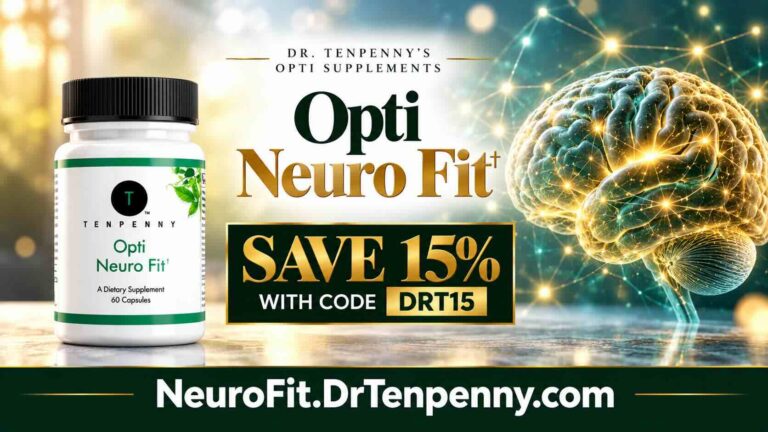
Opti Neuro Fit is crafted to support cognitive function, enhance mental clarity, and promote overall brain health. Formulated with key nutrients, this supplement is designed for individuals seeking a natural boost in focus and cognitive resilience. With ingredients that support neurotransmitter balance and mental acuity, Opti Neuro Fit helps you stay sharp and perform at your best.
Key Benefits
Cognitive Function Support: Helps improve mental performance and clarity.
Enhanced Focus and Clarity: Supports neurotransmitter balance, aiding concentration and focus.
Brain Health and Resilience: Provides antioxidants to protect against oxidative stress in the brain.