DR. SHERRI TENPENNY

Doctor, Speaker, Educator, Consultant

Join Tenpenny Prime for New Medical Content Every Month

DR. SHERRI TENPENNY

Doctor, Speaker, Educator, Consultant

Florida Sues Pfizer: Is The Third Time The Charm?

As October began, cries of joy rang out from those of us in the medical freedom community over Florida Attorney General James Uthmeier’s lawsuit against Pfizer. The state is suing Pfizer for its COVID-era transgressions, accusing the drugmaker of misleading consumers about the safety and effectiveness of its COVID-19 vaccine.
 
Of course, the question on everyone’s mind is: will this lawsuit bring Pfizer to its proverbial knees?
After all, both Kansas and Texas already tried to sue Pfizer years ago for the same transgressions. What happened in those lawsuits? And will Florida be any different?
 

Kansas and Texas

Texas Attorney General Ken Paxton sued Pfizer in November 2023, alleging deceptive claims about the vaccine’s effectiveness and safety. Paxton sued Pfizer under the Texas Deceptive Trade Practices Act (DTPA), alleging that Pfizer misrepresented the effectiveness of its COVID vaccine and engaged in other deceptive conduct.
 
It’s worth reprinting the opening lines:

”The COVID-19 vaccines are the miracle that wasn’t. At the end of 2020, Defendant Pfizer, Inc. (Defendant or Pfizer) broadcast to the world that its COVID-19 vaccine was “95% effective.” Based on this and other statements made by Pfizer touting the efficacy of its new vaccine, Americans were given the impression that Pfizer’s vaccine would end the coronavirus pandemic and lift the omnipresent veil of fear and uncertainty from an anxious public. Placing their trust in Pfizer, hundreds of millions of Americans lined up to receive the vaccine. Contrary to Pfizer’s public statements, however, the pandemic did not end; it got worse. More Americans died in 2021, with Pfizer’s vaccine available, than in 2020, the first year of the pandemic. This, in spite of the fact that the vast majority of Americans received a COVID-19 vaccine, with most taking Pfizer’s. Indeed, by the end of 2021, official government reports showed that in at least some places a greater percentage of the vaccinated were dying from COVID-19 than the unvaccinated. Pfizer’s vaccine plainly was not “95% effective. In summary, Pfizer intentionally misrepresented the efficacy of its COVID-19 vaccine and censored persons who threatened to disseminate the truth in order to facilitate fast adoption of the product and expand its commercial opportunity. In light of the multi-billion dollar bet that Pfizer made on the vaccine and its need to quickly establish the product as the marketing leader, was heavily incentivized to, and in fact did, make misrepresentations intended to confuse and mislead the public in order to achieve widespread adoption of its vaccine.”
 
Kansas Attorney General Kris Kobach sued Pfizer in June 2024, alleging violations of the Kansas Consumer Protection Act over vaccine marketing and safety claims.


So What Happened? (The PREP Act Happened, That’s What)

In Texas v. Pfizer, Inc., No. 5:23-cv-00312 (N.D. Tex.), Pfizer’s legal team successfully moved the case from Texas state court to federal court in December 2023. One of Pfizer’s principal arguments for federal jurisdiction was that the PREP Act applied and provided Pfizer with immunity. Pfizer also argued that federal law preempted Texas’s claims. A year later, on December 30, 2024, Judge Sam Cummings dismissed the case. Cummings is a Reagan-appointed federal judge who has been on the bench since 1987; he was 80 years old at the time of this ruling. Since 2019, most of his cases have been assigned to another judge, James Wesley Hendrix, but Cummings has continued to handle certain cases, like the Pfizer case.
 
On a side note, Pfizer is not the only company trying to move the case to federal court. The same happened in Texas COVID-19 nursing-home cases. In Schuster v. Percheron Healthcare, the defendant removed the case to federal court and then moved to dismiss based on the PREP Act. The plaintiff moved to remand it to Texas state court. Since the PREP Act is primarily an immunity statute, it says covered persons are generally immune from liability for losses caused by the use of qualifying “covered countermeasures.” However, that does not mean every COVID-related negligence claim becomes a federal lawsuit. In another case, Annie Marie Gibbs v. Southeast SNF, the Western District of Texas expressly held that nursing home failures such as inadequate staffing, hygiene, or failure to follow facility policies were not a covered countermeasure, so the PREP Act didn’t completely preempt the state’s claims, and the case was remanded to Texas state court.
 
The Kansas case specifically cites Cummings’ Texas decision as holding that Pfizer was immune under the PREP Act. This case, State of Kansas v. Pfizer, Inc., No. 24-1128, involves Kansas suing Pfizer over alleged misleading statements about its COVID-19 vaccine’s efficacy and safety under its state consumer-protection law. Like the Texas case, Pfizer also succeeded in moving the case from Kansas state court to federal court. In a show of bravado, Pfizer itself told the Kansas court about the Texas decision, and argued that the Texas ruling showed that PREP immunity was a plausible federal defense.
 
But Kansas did something different. Unlike Texas, Kansas immediately challenged the removal and asked the federal court to send the case back to state court, and in May 2025, Judge Daniel Crabtree apparently didn’t fall for Pfizer’s bravado and granted Kansas’s motion to remand. Crabtree stated that the PREP Act has a specific federal cause of action for death or serious physical injury caused by willful misconduct. But Kansas wasn’t suing Pfizer for someone’s death or physical injury. Kansas was alleging deceptive marketing and misleading statements, therefore, the PREP Act’s federal cause of action didn’t provide the same remedy/right that Kansas was pursuing under the Kansas Consumer Protection Act.
 
Naturally, Pfizer appealed to the Tenth Circuit, and it has been there for 14 months, which is unusual. The reason? In August 2025, the judge granted Pfizer’s request to pause the case while awaiting a decision in Supreme Court case No. 24-813. Kansas did not want the pause, but the judge agreed with Pfizer that the other Supreme Court litigation could materially affect the appeal and therefore justified waiting.
 
The SCOTUS case is not a PREP Act case. Instead, Chevron USA Inc. v. Plaquemines Parish, concerns federal-officer removal. This Louisiana parish sued Chevron in state court over environmental damage allegedly associated with oil production. Chevron removed the case to federal court under the federal-officer removal statute. Chevron argued that its historical work for the federal government during World War II—refining aviation gasoline for the military—provided a federal connection sufficient to remove the state lawsuit.
 
This is relevant to the Kansas case because one of Pfizer’s arguments for federal jurisdiction involved federal-officer removal so they’re awaiting the outcome of the Chevron case. But wait a minute, the Chevron case was decided in April 2026, yet the pause is still in place. Why? The Tenth Circuit’s reason for abating the Kansas appeal has now changed and the Supreme Court has answered the federal-officer-removal question that the Tenth Circuit was waiting on. So why hasn’t the Tenth Circuit restarted the Kansas appeal?
 
For a deep dive into the PREP Act, be sure to read Dr. Tenpenny’s substack on how this insidious bill was passed as a sneak attack in the dead of night. Congress is really good at that, by the way.


Will The Florida Case Deliver Justice?

The Texas and Kansas decisions, along with the SCOTUS ruling, most likely gave Florida a useful roadmap for an ironclad case. A state consumer-protection action alleging deceptive marketing doesn’t necessarily become a federal PREP Act case simply because the defendant (Pfizer) says PREP applies. The Kansas decision also shows a substantial legal disagreement about how PREP applies to these state consumer-protection claims. When will the Kansas case proceed, and could it also mean that Texas might reopen its case, or file a new one?
 
The Florida case differs from Texas and Kansas is several meaningful ways. First, Florida is not bringing a federal claim, nor is it challenging Pfizer’s performance under a federal contract. In fact, Florida went out of its way to say they were claiming nothing federal, but instead challenging Pfizer’s commercial marketing conduct under Florida law. Clearly, Florida seems to be intentionally trying to make it harder to move the case to federal court and, therefore, to PREP Act coverage. Pfizer will still likely argue that their COVID-vaccine activities were conducted pursuant to a massive federal vaccination program and federal contracts. Florida has deliberately drafted its complaint around state consumer-protection violations rather than vaccine-injury claims, while expressly disclaiming federal claims and certain federal-contract theories. This is quite important.
 
The lawsuit says Pfizer urged people to get the shot to protect others, even though the company never tested whether the vaccine stopped the virus from spreading. Florida has also accused Pfizer of using unfair tactics to dominate the market, saying the company made more than $80 billion from vaccine sales and then nearly quadrupled the price from its initial $30 to $110-$130 per dose. The state is asking for fines of $10,000 per violation, and $15,000 when seniors or disabled people were harmed, and the return of Pfizer’s profits.
 
The lawsuit outlines two principal counts under the Florida Deceptive and Unfair Trade Practices Act (FDUTPA). First, Florida alleges that Pfizer misrepresented the vaccine’s safety by marketing the vaccine as safe while allegedly failing to disclose or adequately communicate information concerning myocarditis, miscarriage risks, and other adverse events reported after vaccination. The complaint cites Pfizer’s own post-authorization safety database (NOT VAERS), which contained nearly 160,000 adverse reported events by February 2021. Rather than Florida alleging vaccine injury, meaning that those reports mean Pfizer’s vaccine caused those issues, the AG argues instead that Pfizer possessed this safety information while making broad public representations about safety.
 
Second, Florida also alleges that Pfizer encouraged people to get vaccinated because it would protect other people. The complaint points to statements by CEO Albert Bourla and other Pfizer executives suggesting that vaccination would help prevent transmission. In fact, Bourla himself is personally named as a defendant in the case. Florida alleges that neither Pfizer’s clinical trial design nor the evidence available at the time of these statements was adequate for Pfizer to make the claims it did. In fact, Pfizer executive Janine Small, in her 2022 European Parliament testimony,  stated that Pfizer had not tested the vaccine for its ability to stop transmission before authorization.
 
Here’s the full Florida 49-page lawsuit if you’re interested.
 
And here’s Janine Small’s video clip from her full testimony below.

Did Pfizer Shoot Itself In The Foot?

Remember when Pfizer refused to be part of the US government’s vaccine development? Pfizer’s decision to develop the vaccine largely on its own, rather than participate in Operation Warp Speed’s federally funded development program, is directly relevant to these lawsuits. In fact, Judge Crabtree’s Kansas remand decision specifically discussed it.
 
You’ll recall that Pfizer did not receive federal R&D funding through Operation Warp Speed in the way Moderna and some other manufacturers did. Pfizer/BioNTech financed the development themselves, with Bourla famously stating this on a CBS Face the Nation interview in 2022.
 
However, Pfizer entered into a contract with the US government to buy 100 million doses for nearly $2 billion, contingent on FDA approval of its COVID vaccine.
 
The Kansas lawsuit specifically mentions the Pfizer federal contract because it includes a provision stating that Pfizer and its partners had the right, but not the obligation, to release information about its COVID development program. The contract also gave Pfizer free rein and complete latitude over its public communications. Pfizer’s federal contract required it to produce and deliver vaccines, but Kansas wasn’t suing Pfizer for failing to produce or deliver them. Instead, Kansas sued Pfizer over what Pfizer allegedly said publicly about the vaccines. Judge Crabtree concluded that the alleged deceptive marketing was not sufficiently connected to Pfizer’s federal contractual duties. In other words, the marketing was not part of its federal duties. This was devastating to Pfizer’s federal argument. Pfizer is arguing that the government required extensive reporting in the contract, but reporting does not equal public communications.


So if Pfizer lied…they’re in deep you-know-what.


Florida’s lawsuit says it is not challenging Pfizer’s production or delivery of vaccines under a federal contract, but is challenging Pfizer’s allegedly deceptive communications to the public. Florida alleges that Pfizer violated FDUTPA regardless of whether an individual consumer actually received the vaccine or suffered a physical injury. The violation occurred when Pfizer engaged in deceptive marketing, not when a particular person received Pfizer’s vaccine and was injured. This is a clear and deliberate attempt to keep the lawsuit on the consumer-protection/marketing side of the line rather than the vaccine-injury/product-liability side. It seems the Florida AG did his homework, and it seems the Sunshine State is over the target.

Pfizer’s Clouded Past

Of course Pfizer has a substantial history of paying settlements in product-liability cases. The most notable example is the Celebrex case from 2008; Pfizer paid a whopping $745 million for personal-injury claims, plus another $89 million for federal consumer-fraud claims and $60 million for state claims. The company has paid out $2.3 billion for Bextra and other drugs; $1.3 billion was for CRIMINAL charges. And Pfizer paid out nearly $500 million for illegal marketing of Rapamune. In total, Pfizer has paid $11+ billion in regulatory penalties.


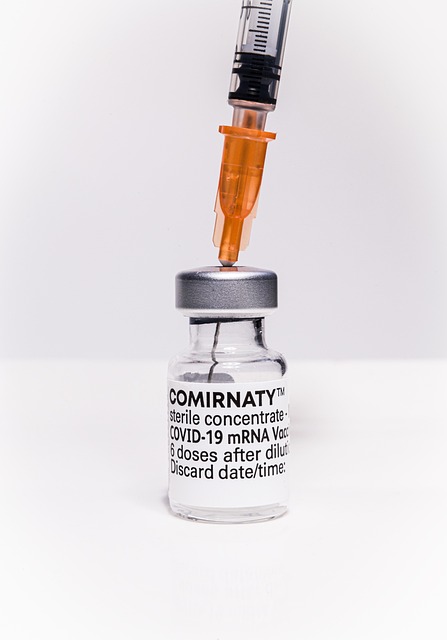
Pfizer has even paid money on vaccine injury claims, but we have to go way back before all the liability protection. One example is a polio vaccine case from the 1960s in which a woman sued Pfizer after receiving the Sabin oral polio vaccine and then becoming permanently quadriplegic. Pfizer settled her case in 1971 for $350,000. More recently, Pfizer has paid awards negotiated under the federal Vaccine Injury Compensation Program, like the $17,500 payment involving its Prevnar pneumococcal vaccine. But Pfizer can’t be sued for their COVID vaccine harm because the PREP Act is in place. Comirnaty is a covered countermeasure under the PREP Act, and the Countermeasures Injury Compensation Program (CICP) is the exclusive compensation mechanism. It’s a joke. 
 

Was It Orchestrated From The Beginning?

One camp says the three states orchestrated this from the beginning. The moves do look deliberate. For example, Florida avoided the Texas “consumer transaction” problem; the new lawsuit shows considerable effort in establishing precisely the connection between Pfizer and its commercial conduct with consumers and Florida’s consumer protection law.
 
Maybe it was orchestrated after all. The Texas lawsuit got the corrupt judicial system to show its cards, the Kansas lawsuit tightened the noose, and the Florida lawsuit may be “the one.” Did the orchestration go back even further? Were the federal contracts worded in such a way to set Pfizer up for a fall? It seems so. After all, Big Pharma always lies to the public. Pfizer likely thought they would do so again, taking comfort in the PREP Act that was likely written  and passed with Pfizer’s help anyway. Let’s hope for a false sense of security and a swift downfall to Pfizer.
—————————————————————————————————————————————————————
Like what you’re reading on The Tenpenny Report? Share this article with your friends. Help us grow.
Get more of Dr. Tenpenny’s voice of reason at her website.
 
Join our list here
 
Make a donation here (and thank you!) 
—————————————————————————————————————————————————————
 
Fed Up Texas Chick is a contributing writer for The Tenpenny Report. She’s a rocket scientist turned writer, having worked in the space program for many years. She is a seasoned medical writer and researcher who is fighting for medical freedom for all of us through her work.  
 
 All comments and opinions shared by our interviewees are their own and may not reflect the opinions of Dr. Tenpenny or any of *The Tenpenny Companies* programs or subsidiaries. We are neither responsible nor liable for any discrepancies in our guest authors’ articles or video recording.

Share This Post

More To Explore

08-09-21 Deep Dive PREMIUM – with Jamie Walden

Meet Jamie Walden, of Omega Dynamics. Imbued with matchless passion for all things “adventurous” and “fun”, Jamie’s teen years were filled with significant tumult (injuries, arrests, and choices of near life-long consequence). However, amid the rebellion and ruckus, Jamie continually endeavored to one day earn the title, “U.S. Marine”. After being nominated to attend the National Youth Leadership Forum on Defense, Intelligence, and Diplomacy in Washington, D.C., where he subsequently secured a nomination to the US Naval Academy, Jamie made the determination to simply enlist in the Marine Corps Infantry and achieve his childhood dream.

After leaving the Marines Corps, Jamie obtained a double major B.S. in Law Enforcement and History. Pursuing a career in Federal Law Enforcement, Jamie was selected as an Intern for the United States Marshals Service, and subsequent recruitment to a “Three Letter” agency. It was then, when Jamie received “the call”, that the Lord began testing and affirming the genuineness of his faith.

After again returning to Iraq in 2014 to serve the Christians suffering under the savage campaign of ISIS, Jamie and his wife Virginia were compelled to surrender their paradigm and follow the Lord into full-time ministry.

“The Mission of Omega Dynamics is this: to teach, train and equip “Those with ears to hear” to stand anew in their rightful place as more than conquerors in a kingdom that cannot be shaken…this generation is literally, eternally dying for us to”
This post is only available to members.

Deep Dive PREMIUM with Dr Peter McCullough

https://media.blubrry.com/2754542/wordpress-675139-2217541.cloudwaysapps.com/wp-content/uploads/2021/DeepDiveaudiomp3m4a/08-03-21-Dr-Peter-McCullough-Deep-Dive-PREMIUM.m4a Podcast: Play in new window | Download (Duration: 29:45 — 20.2MB) | Embed Subscribe: RSS | More

This post is only available to members.

Deep Dive PREMIUM with Scott Jensen

https://media.blubrry.com/2754542/wordpress-675139-2217541.cloudwaysapps.com/wp-content/uploads/2021/DeepDiveaudiomp3m4a/07-22-21-Dr-Scott-Jensen-Deep-Dive-PREMIUM.m4aPodcast: Play in new window | Download (Duration: 34:11 — 23.2MB) | EmbedSubscribe: RSS | More Dr. Scott Jenson and his wife, Mary, a small animal veterinarian, have raised three very successful children – Cristy, an anesthesiologist, Matt, an estate attorney, and Jackie, a family doctor. He has served many organizations as a board member […]

This post is only available to members.

Do You Want To Book Dr Tenpenny for an Event or Interview?

drop us a line to contact us

Dr Tenpenny Interview